 Bienvenue !
To have it in for somebody
'Unnecessary rescues' soar in Nepal on profits from insurance payouts
[Article] Au Népal, certains organismes de randonnée empochent des dizaines de milliers de dollars en faisant payer les compagnies d'assurance pour des sauvetages en hélicoptère factices ou abusifs.
Si vous ne connaissez pas un mot, surlignez-le avec votre souris et cliquez sur “Translate” pour le traduire dans la langue de votre choix.
Profitez de la lecture automatique avec accent avec un abonnement
'Unnecessary rescues' soar in Nepal on profits from insurance payouts.Lukla (Nepal) (AFP) - Tourists hiking in Nepal's Himalayan mountains are being pressured into costly helicopter evacuations at the first sight of trouble by guides linked to powerful brokers who are making a fortune on "unnecessary rescues", industry insiders say.Dodgy operators are scamming tens of thousands of dollars from insurance companies by making multiple claims for a single chopper ride or pushing trekkers to accept airlifts for minor illnesses, an investigation by AFP has revealed.In other cases, trekking guides, promised commission if they get tourists to return by chopper, are offering helicopter rides to tired hikers as a quick way home, but billing them as rescues to insurance companies.The practice is so rampant helicopter pilots are reporting "rescuing" tourists who appear in perfectly fine health."It's a racket that's tantamount to fraud, and it's happening on a large scale throughout Nepal," said Jonathan Bancroft of UK-based Traveller Assist, which carries out medical evacuations in Nepal on behalf of global travel insurance companies.Trekking outfits stand to make more in kickbacks from evacuating a hiker by helicopter than the cost of the trek itself, contributing to an alarming rise in rescues from Nepal's biggest tourist attraction: the fabled Himalayas.Traveller Assist said 2017 was the most expensive year on record for travel insurance companies covering tourists in Nepal due to a startling number of helicopter rescues -- though this year is on track to beat it.There is no centralised dispatch centre for helicopter flights in Nepal making it difficult to know precisely how many evacuations are carried out.But over the past six years the skies of the Everest region have turned into a helicopter highway, with a six-fold increase in the number of choppers in the air, each logging over 1,000 flying hours per year, according to industry data."We used to see maybe one helicopter in two or three days. Now we are seeing 10 or so in a day," said Thanishwar Bhandari, who works as a small clinic in the Everest region.Meanwhile, one foreign pilot, who requested anonymity, said he rescued trekkers on a near daily basis in April and May this year, peak trekking season."I think I took three people the whole season who appeared genuinely ill," he told AFP.- 'Told to lie' - Australian trekker Jessica Reeves was urged by her guide to be evacuated by helicopter from near Everest base camp in October 2017 when she complained of a common cold."He kept telling me to get a helicopter," Reeves told AFP....
Article complet réservé aux abonnés.
Accédez à l'intégralité de l'article, choisissez un abonnement
Accédez à l'intégralité de l'article, choisissez un abonnement
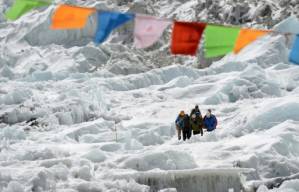
The cost of the 14-day trek to Everest base camp varies wildly between outfits, but many operators offer the tour for less than $1,000 -- below cost price according to multiple industry sources © AFP PRAKASH MATHEMA